
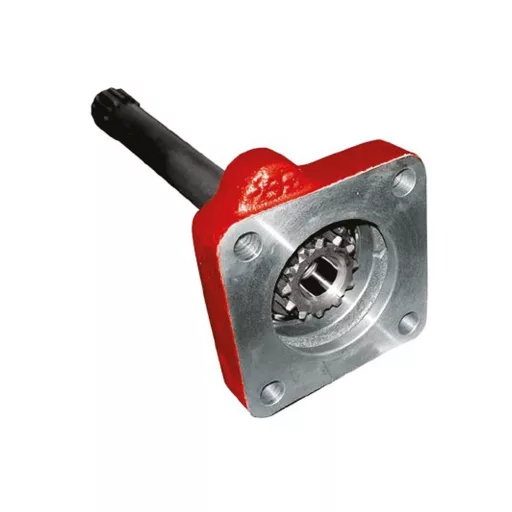
Power Take-Off (PTO) – an Efficient Solution for Driving Hydraulic Systems
Power Take-Offs (PTOs) play an indispensable role today in the world of commercial vehicles and special-purpose bodies. By using a PTO, the vehicle’s own engine can supply power to various auxiliary equipment such as hydraulic pumps, tipping bodies, or cranes. This solution is not only more cost-effective than installing a separate engine, but also more reliable and more compact.
However, selecting the right PTO and the appropriate accessories requires solid technical knowledge and careful planning. This article aims to support that decision-making process.

What Is a Power Take-Off (PTO) and Why Is It Essential?
A power take-off is a mechanical unit that extracts power from the vehicle’s drivetrain—most commonly from the gearbox and transmits it to an external device. This becomes necessary when the vehicle is not used solely for transportation, but also for active working operations.
Typical examples include construction, municipal, and agricultural vehicles, where hydraulic systems require continuous operation and high torque. A PTO makes it possible for these systems to operate using the vehicle engine that would otherwise only be used for driving.
Internal and External PTOs – Which One Is Suitable for Which Application?
Power take-offs can generally be divided into two main categories: internal PTOs and external PTOs. Internal PTOs such as a 3-gear ZF gearbox-mounted PTO are installed directly onto the gearbox at the manufacturer-designated mounting point. Their key advantage is their ability to transmit high torque, making them an ideal choice for hydraulic systems that require heavy-duty performance.
External PTOs, by contrast, are usually connected to the engine crankshaft or via a belt drive. For this reason, they are mainly used in applications with lower power requirements, such as light tipping bodies or vehicles where gearbox-mounted PTO installation is not feasible.
Operation, Load Capacity, and Proper Use
PTO operation is typically controlled pneumatically or electronically and can be activated from the vehicle cab. Lubrication of the PTO is most often provided by the gearbox oil circuit, which makes correct oil quality and regular oil changes especially important. In the event of overload, the shaft seal of the hydraulic pump may be damaged, potentially leading to the mixing of gearbox oil and hydraulic oil, which can result in serious mechanical failures.
During system design, it is essential to clearly determine whether the PTO will drive a hydraulic pump or a cardan shaft. While hydraulic connections can be modified relatively easily, cardan-driven systems operate under high loads, and any subsequent modifications usually require a specialized workshop, significant financial investment, and extended downtime.
In modern, computer-controlled vehicles, digital integration is an additional important factor, as the operating conditions of the PTO must be precisely configured within the vehicle’s control system.
Overall, a properly selected and professionally operated PTO provides a reliable long-term foundation for the efficient operation of hydraulic systems.
If you have any questions regarding the use of PTOs for driving hydraulic systems or need assistance in selecting the required components, feel free to contact our expert colleagues. They will be happy to help you make a well-informed purchasing decision.

