
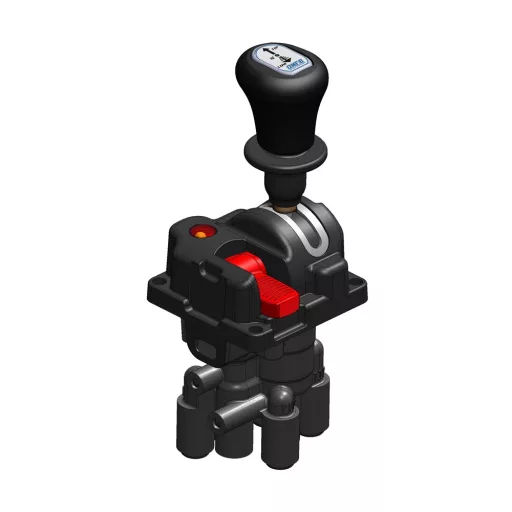
Pneumatic Safety Valve: A Key Element of Pressure Protection in Industrial Systems
One of the foundations of modern industrial automation is pneumatic technology, where compressed air serves as a reliable, clean, and efficient energy source. However, safe operation of pneumatic systems requires more than simply selecting an appropriate compressor or control valve. Components that protect both equipment and operators under abnormal operating conditions play a critical role. The pneumatic safety valve performs exactly this function: it prevents the development of overpressure and contributes to long-term stable and reliable system operation.
In this article, we provide an overview of the operating principle of this important pneumatic valves and the key criteria for its selection.

Brief Overview of Pneumatic System Operation
The operating principle of pneumatic systems is straightforward: air is compressed by a compressor and distributed through a piping network to the points of use. An air receiver tank compensates for pressure fluctuations, while various valves such as the OMFB pneumatic tipping control valve regulate airflow direction, flow rate, and pressure. Actuators, including pneumatic cylinders, rotary actuators, or other devices, perform the work by converting the energy of compressed air into mechanical motion.
Within this complex system, precise pressure control is essential. If a malfunction such as a blockage, faulty control, or compressor failure causes the system pressure to exceed the permissible limit, serious damage may occur. This is where the pneumatic safety valve becomes critically important.
Function and Operating Principle of the Pneumatic Safety Valve
The primary function of a pneumatic safety valve is the automatic relief of excess pressure. Most designs are based on a spring-loaded mechanism. Under normal operating conditions, the spring keeps the valve closed, preventing air from escaping. When the system pressure reaches the preset threshold, the force exerted by the compressed air overcomes the spring force, causing the valve to open.
Excess air is then released in a controlled manner, reducing the load on the system. Once the pressure drops back into the safe operating range, the spring mechanism returns the valve to the closed position automatically. This simple yet highly effective operating principle protects pipelines, pressure vessels, and other system components from damage.
Selection, Types, and Maintenance of Pneumatic Safety Valves
When selecting a suitable pneumatic safety valve, several factors must be taken into account. These include the system’s maximum allowable operating pressure, the expected back pressure, and the quality of the compressed air (temperature, humidity, and level of contamination). Available designs include conventional direct-acting valves as well as balanced constructions that ensure accurate operation even under fluctuating back-pressure conditions.
Maintenance is equally important: regular inspection and cleaning, along with the replacement of worn components, help prevent failures. A properly selected and well-maintained safety valve not only extends the service life of the equipment but also contributes significantly to the safe and uninterrupted operation of pneumatic systems.
If you have any questions regarding our pneumatic system components, pneumatic safety valves, or would like further information about hydraulic systems and related products, please feel free to contact our colleagues with confidence.

