
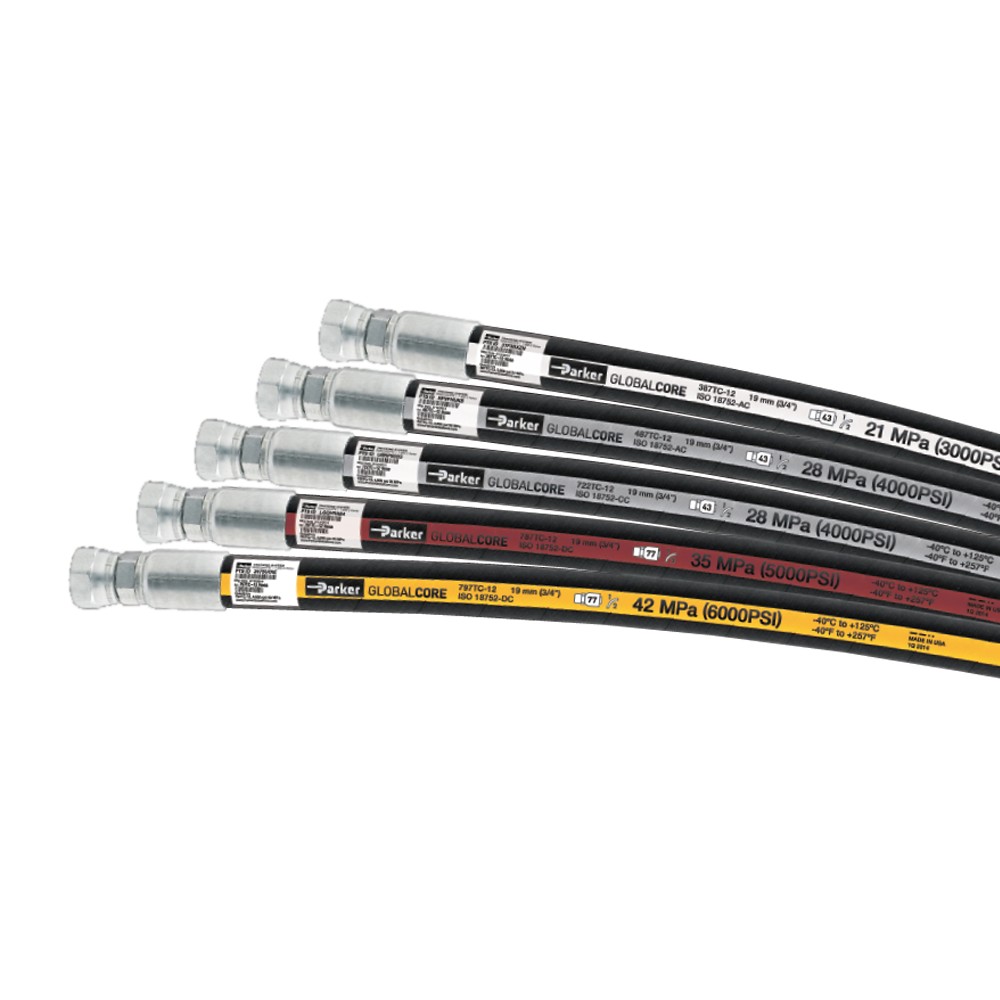

Pipe sizes: internal and external diameter
Neither value says much on its own, as the two together define the capabilities of the hose. The internal diameter is an important value because it directly affects the amount and speed of the flowing fluid, while the external diameter provides essential information regarding connections, fastening solutions, and mechanical protection.
If the two values are not properly determined, an incorrect size selection can reduce system performance or even lead to a dangerous operating condition.
Operating pressure
Operating pressure is the level of continuous load under which the hydraulic system operates on a daily basis. When selecting the proper hose such as a 4SP DN16 product with 16 mm internal diameter this parameter must always be considered based on manufacturer specifications, including a safety margin. In other words, the actual operating pressure should be somewhat lower than the rated value.
If the hose's operating pressure is lower than what the system requires, it may lead to premature failure or even an immediate accident. Of course, oversizing is not a solution either, as it compromises efficiency and results in a less optimal investment from a cost perspective.
Determining the correct operating pressure depends on many parameters in each individual case, and identifying the ideal hose size from this perspective is truly a task for an expert.
The relationship between burst pressure and pipe size
Burst pressure is the limit at which the hose physically fails in other words, it cracks or ruptures. This parameter depends not only on the material quality, but also on the precise design of the pipe sizes especially the wall thickness, the number of reinforcement layers, and the manufacturing technologies. A hose with a too-thin wall or poor reinforcement will have low burst pressure, posing a serious safety risk.
To ensure safe operation, burst pressure must exceed operating pressure several times over. This multiple safety factor is necessary because sudden pressure surges so called pressure spikes are common in hydraulic systems, which can momentarily reach many times the normal operating value.
The proper burst pressure can depend on the nature of the application, for example whether it operates continuously or intermittently, on temperature conditions (as burst pressure can drop at higher temperatures), and on the mounting conditions as well.
The well-chosen hose, correct pipe sizes, and optimal balance of burst pressure together guarantee that the hydraulic system will operate safely and efficiently in the long term, with minimal risk of failure.
If you have further questions on the topic, please contact our expert staff!

