
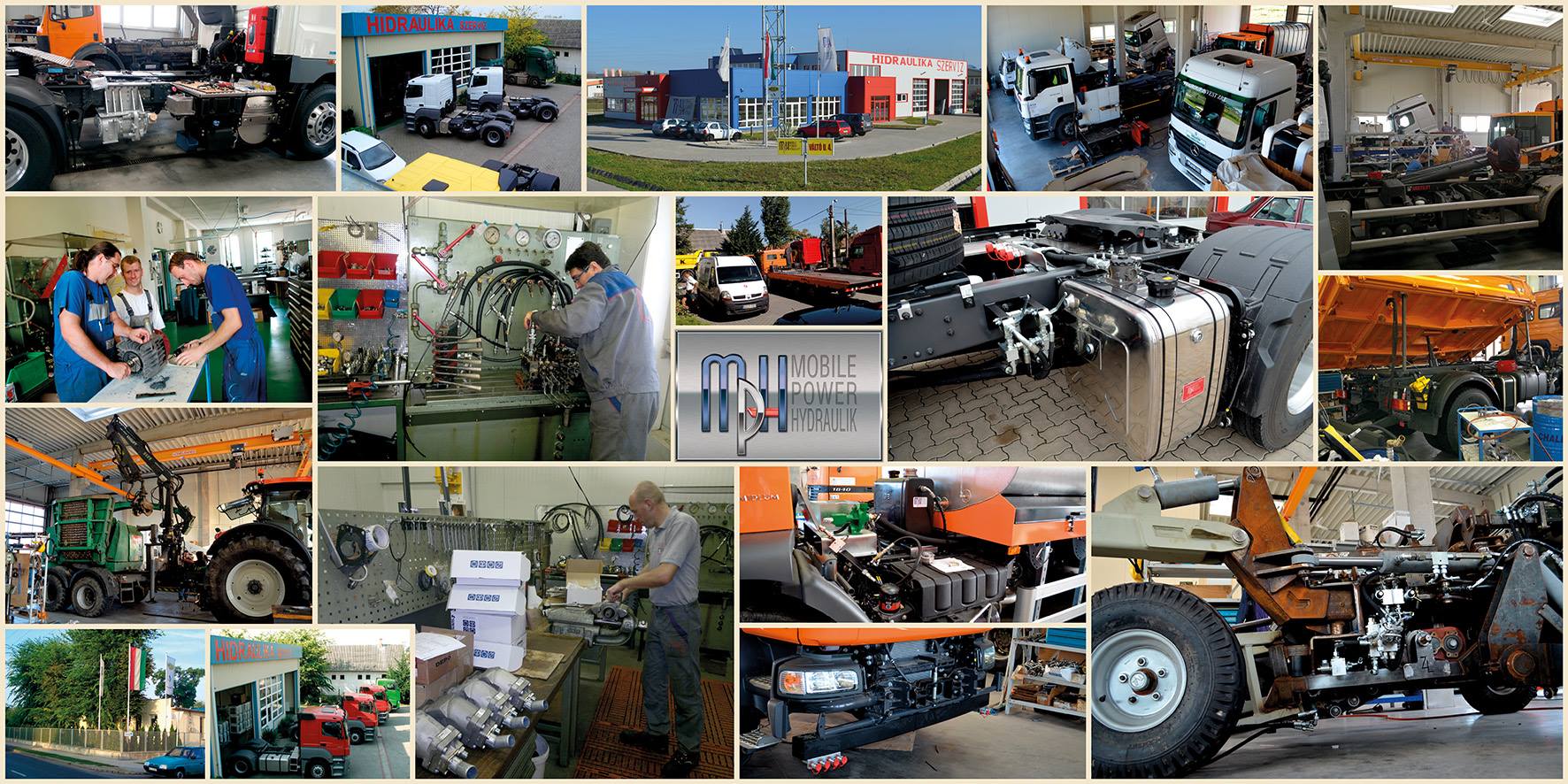
The Fundamentals of Hydraulic Systems and Their Role in Modern Engineering
Hydraulic systems transmit mechanical energy through fluid, allowing for precise and efficient force transmission. They play a crucial role in the operation of industrial machines, agricultural equipment, and construction tools, and are essential for performing precise and complex motion sequences.

Basic Principles and Operation of Hydraulic Systems
According to Pascal’s Law, pressure applied to a confined fluid is transmitted equally in all directions. This principle forms the foundation of hydraulic system operation.
Hydraulic systems consist of several essential components. One of these is the hydraulic pump, also available at MPH, which ensures the flow of the working fluid (typically oil). For the system to operate efficiently, the pump must be properly sized. If the performance of the pump is too low, the system may fail to achieve the desired efficiency.
An undersized pump can also negatively affect the lifespan of the equipment, as it is forced to run at its maximum capacity continuously. This can lead to overheating and premature wear of components.
Within hydraulic systems, valves control flow direction and pressure, while hydraulic cylinders convert flow into mechanical energy.
The harmonious operation of these components enables the execution of complex tasks, such as controlling the movement of an excavator’s arm or operating an industrial press with precision.
Main Advantages and Applications of Hydraulic Systems
One of the greatest advantages of hydraulic systems is the precise control of large forces. Even a small control valve can move massive loads with high accuracy and quiet operation. These systems are also known for exceptional energy efficiency and long service life.
Typical application areas include:
-
Industrial machinery such as production lines and robotic systems,
-
Agricultural equipment, including tractors and seeders,
-
Construction and mining equipment, like excavators and cranes.
These examples clearly show how broad and diverse the scope of application is. Hydraulic systems are ideal for a wide variety of operations. The Parker VP1-110 piston pump, for instance, performs excellently in medium-pressure mobile applications.
Modern hydraulic systems combined with advanced electronics enhance automation capabilities and allow for even more precise control.
Maintenance of Hydraulic Systems
Although hydraulic equipment is known for its high reliability, routine maintenance is required to preserve optimal performance.
It is especially important to monitor the condition of seals, which may degrade over time. Under high pressure, worn seals can lead to leakage.
Maintaining fluid cleanliness is also critical, as contaminants can significantly reduce efficiency and may result in serious system failures. Proper cooling should not be overlooked either, since overheating can degrade the quality of the hydraulic oil, reducing system performance and increasing maintenance costs.
If you have any further questions about how hydraulic systems work or regarding any of the products we offer, feel free to contact usthrough any of our available channels.

