
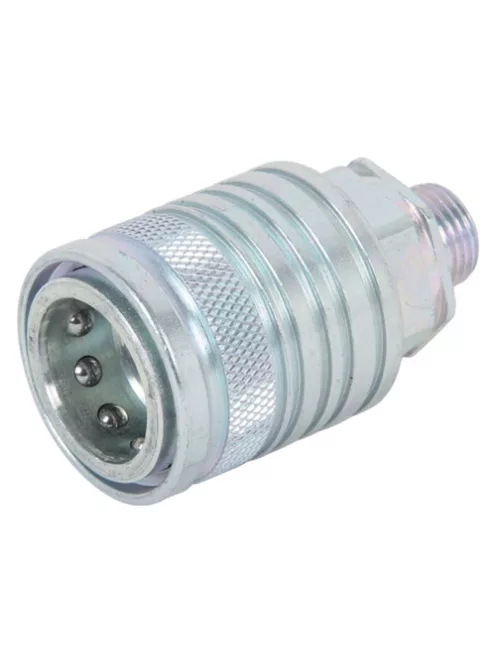
Hydraulic Coupling-An Essential Component for the Reliable Operation of Trucks and Machinery
The hydraulic systems of trucks and machinery are expected to deliver high performance and reliability. Alongside pumps, cylinders, and control valves, the hydraulic coupling is the key element that ensures the smooth flow of fluid powering the system, and enables the fast and safe connection of different components.
It may seem like a small and insignificant part, yet cutting corners on its quality can have serious consequences. In this article, we will show you why this component is so important, what to pay attention to when purchasing it, and what practical considerations are involved.

Why is it important to choose the right hydraulic coupling?
Hydraulic systems operate under extreme conditions: high pressure, constant vibrations, and significant temperature fluctuations, all while being subjected to intense stress.
If the hydraulic quick coupling connecting the system’s elements does not fit precisely, or if it is made of material unsuitable for the required load, performance loss and leakage are almost guaranteed and we may only be lucky if more serious accidents are avoided.
A high-quality hydraulic coupling ensures leak-free operation, reduces maintenance costs, increases the lifespan of the equipment, and makes assembly, maintenance, and system modifications faster and easier.
It is clear that the reliability and proper performance of a hydraulic system depends not only on the larger components, but also greatly on the quality of these small connecting elements.
Key aspects when purchasing
When selecting couplings, the first thing to determine is the system’s operating pressure. This defines the load the components must withstand during operation.
Couplings must also be compatible with the elements they connect for example, a threaded quick coupling socket will only fit the appropriate plug. It is also necessary to take into account the standards followed by the other system components.
Material quality is another crucial factor: stainless steel is usually the right choice, but various special alloys may also be advantageous in terms of corrosion resistance.
Environmental factors must not be overlooked either: in dusty, humid, or extreme temperature conditions, it is particularly important to use well-sealed, durable versions.
If hoses are frequently replaced for any reason, quick couplings are recommended, as they make the work much easier.
Maintenance and replacement
Even the highest-quality hydraulic components are not everlasting. Over time, seals wear out, fittings loosen, and metal surfaces may show signs of wear. Therefore, regular inspection and timely replacement of weakened or defective elements is essential.
During maintenance, it is important to check for any traces of leakage at the hoses or couplings, ensure the elements fit securely, and thoroughly inspect for cracks or deformation.
By maintaining the quality of hydraulic couplings, not only can machinery performance remain optimal, but unexpected downtime and costly repairs can also be prevented.
If you have further questions, please contact our team our experts are at your service.

